
Why I Don’t Think Jewellery Needs to Match Anymore
How embracing mismatch makes jewellery feel more like your own
Growing up in the 2010s, it felt like jewellery had to be perfect, delicate and minimal. Me and everyone else had the exact same Pandora rings, and jewellery felt a bit meh, and there was no personality. I guess everyone just wanted to keep things simple, which is fair.
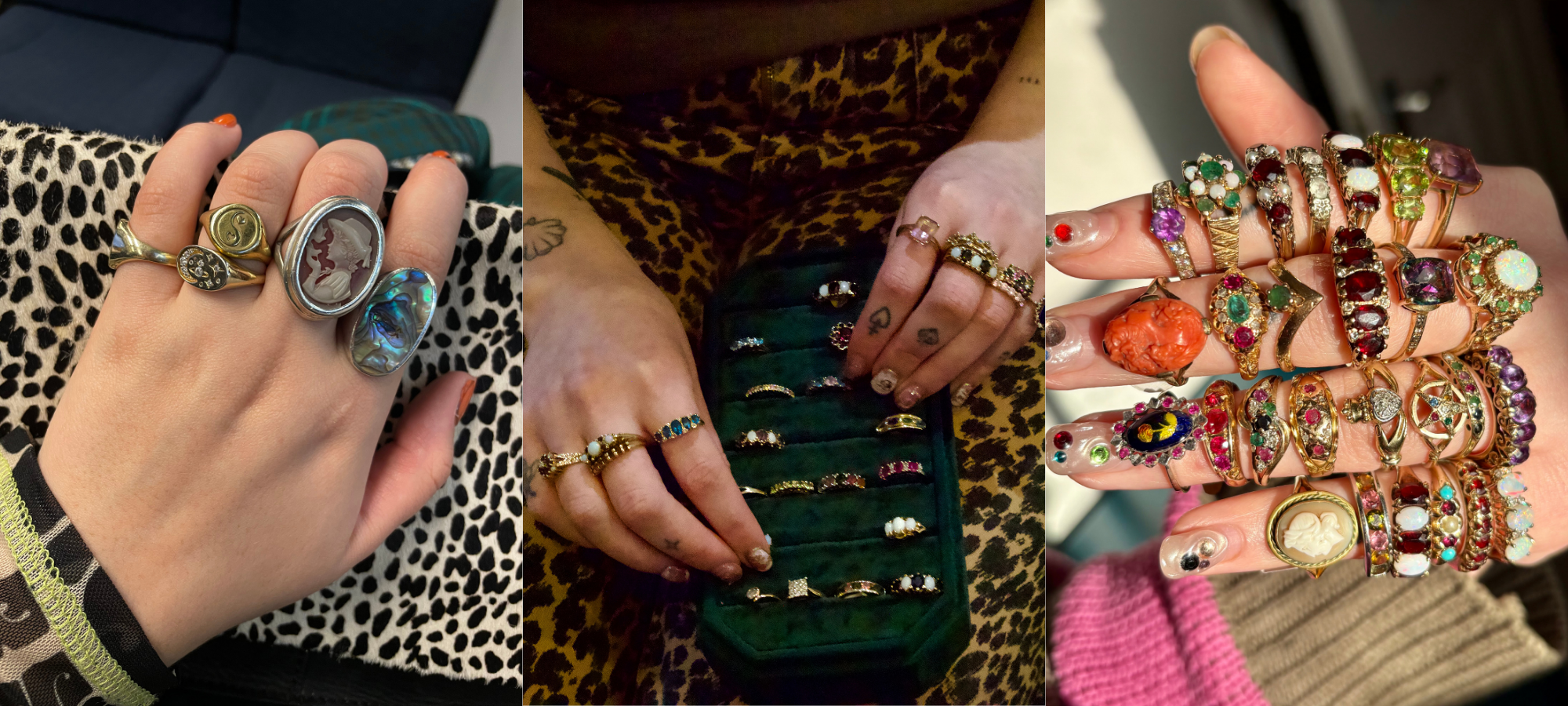
Examples of building ring stacks by mixing different gemstones, settings and band styles rather than matching pieces
But this is also where my love for vintage began. I’ve always had big fingers, and the more ‘generic’ jewellery brands never fit me. I still remember standing in Topshop trying on the XL rings and none of them fitting, which did feel quite tragic at the time. Luckily, my mum suggested I try vintage instead.
Fast forward to now, after years of working with vintage jewellery and selling thousands of pieces, I’ve seen every size, shape, style and stone combination you can think of, because of that, the idea that everything should match doesn’t make sense to me anymore. Nothing brings me more joy than seeing people pick out pieces that genuinely speak to them, especially when they’re completely one of a kind (vintage).
The shift away from “perfect” jewellery
Whenever I’m chatting with people at markets or online, it feels like there’s been a shift in how people choose jewellery. To me, people feel like they look more comfortable picking pieces based on emotion or memory, rather than whether it fits a certain look or aesthetic.
Whether it’s something that reminds them of their mum, a charm that represents their dog, or just a ring they’re instinctively drawn to. It feels a lot more personal now.
That being said, I don’t think minimal or delicate jewellery has disappeared at all. A lot of people still love it, and it looks great. What’s changed is that people aren’t as strict about sticking to one style. Mixing contemporary and vintage, delicate and chunky, is becoming more natural.

From minimal to maximal. Sorrell Jewels rings styled by customers, showing a mix of delicate pieces and slightly bolder styles worn together
Why vintage works so well
Vintage naturally fits into this way of wearing jewellery because nothing is ever designed to match perfectly in the first place.
Every piece comes from a different era, with different proportions, details and types of wear. By bringing those pieces together, you automatically end up with a mix of styles and shapes that you wouldn’t get if everything was bought new at the same time.
Even when I’m sourcing for Sorrell Jewels, I’m always drawn to completely different things. Sometimes it’s the stone, sometimes it’s the setting, and sometimes it’s the tiny details, like a hidden engraving inside the band or a small imperfection that shows it’s been worn and loved before.
That’s the part you can’t recreate with mass-produced jewellery. And when you start combining those pieces, the mismatch actually becomes the most interesting part. Every stack ends up telling a slightly different story depending on how you wear it.
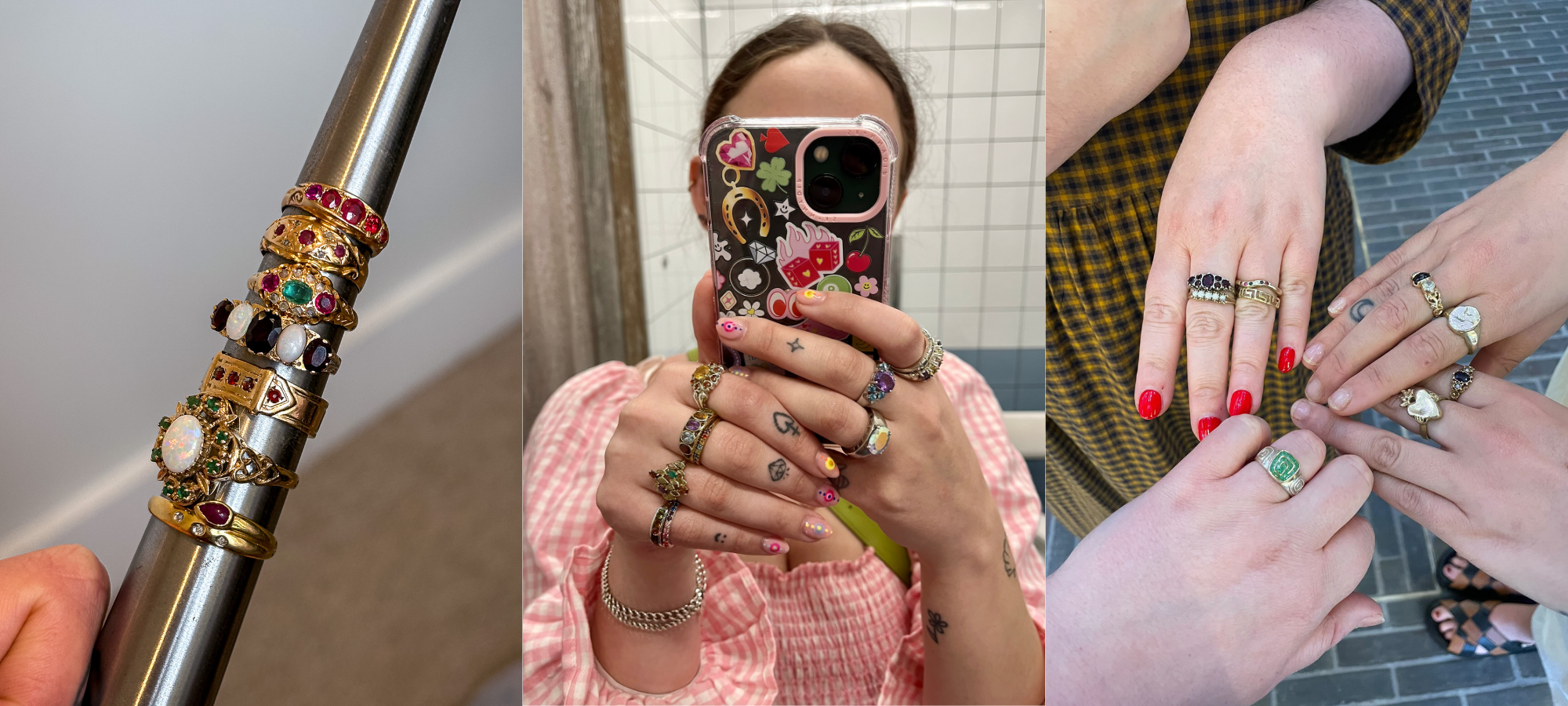
A look through past Sorrell Jewels finds, highlighting the variety in vintage jewellery across different eras
Styled vs collected
You can usually tell when jewellery has been bought all at once, because everything looks a bit too similar. The styles repeat, the shapes are the same, and it feels controlled.
Whereas when something has been built over time, it feels completely different. It’s more personal, and usually there’s a story behind each piece, whether that’s where it was found or why it was chosen.
If you’ve ever seen my ring stacks, you’ll know I love a bit of contrast. I mix silver and gold, vintage and contemporary pieces, different stones, different shapes, pretty much everything. I also love the small imperfections, like scratches on rings I’ve worn every day, because they make the pieces feel even more like mine.
That mix of contrast and emotion is what makes jewellery feel collected rather than styled.
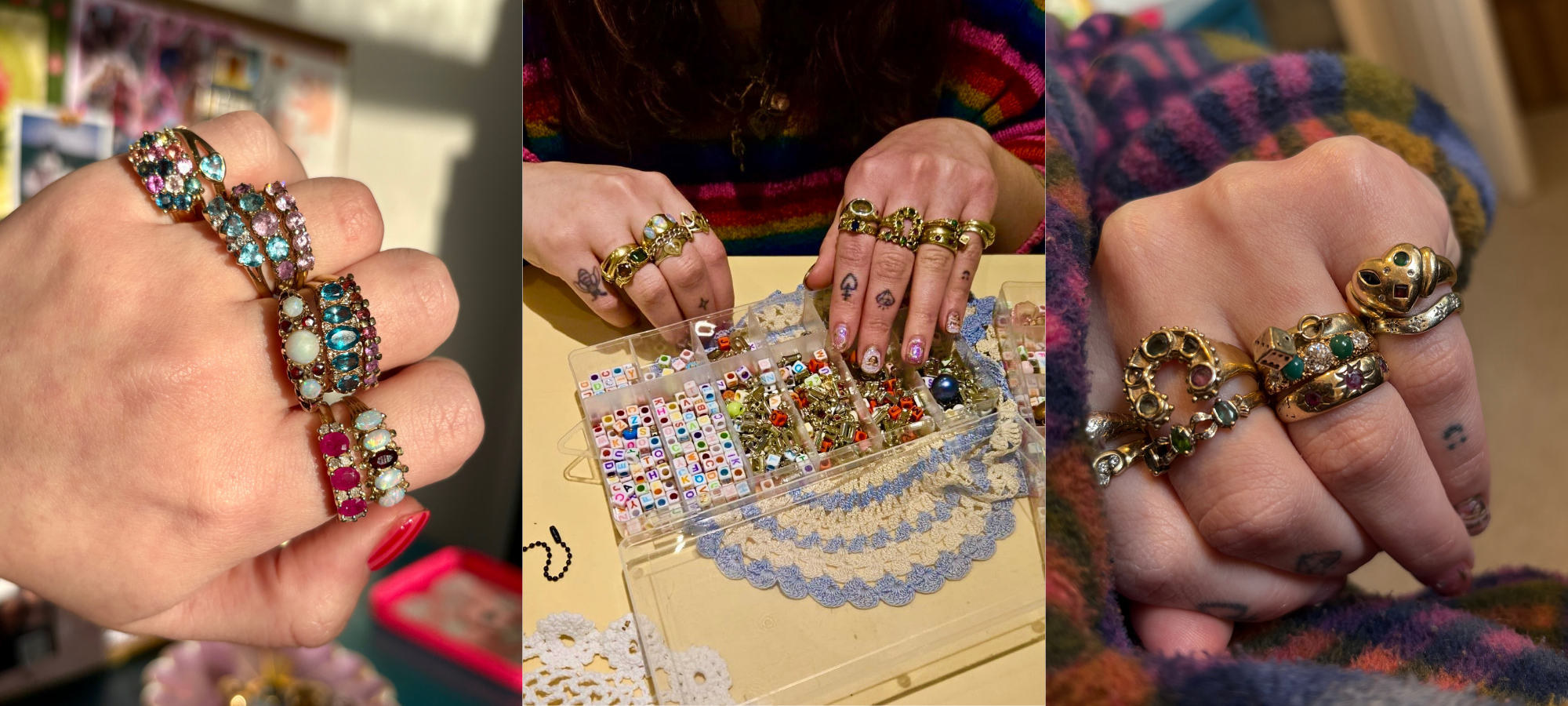
Trying different combinations of rings to see what works, focusing on contrast in size, colour and detail
How I build my stacks
I’ve shared quite a lot about how I build my ring stacks, but when I really think about it, a lot of it comes down to instinct.
I’m definitely a maximalist, so my natural approach has always been more is more. But I don’t think that means just piling everything on without thinking. The biggest thing I focus on is balance.
If every ring is chunky, it can feel a bit overwhelming, so I mix in thinner bands alongside bigger vintage rings. That contrast is what makes it feel more considered rather than chaotic.
The same goes for gemstones. I actually think maximalist styling works best when stones clash slightly, rather than matching perfectly.
I also always think about leaving a bit of breathing room. I do tend to wear rings on most fingers, but I’ll mix up how many are on each one so it doesn’t feel too uniform. Those small gaps are what make everything look more intentional.
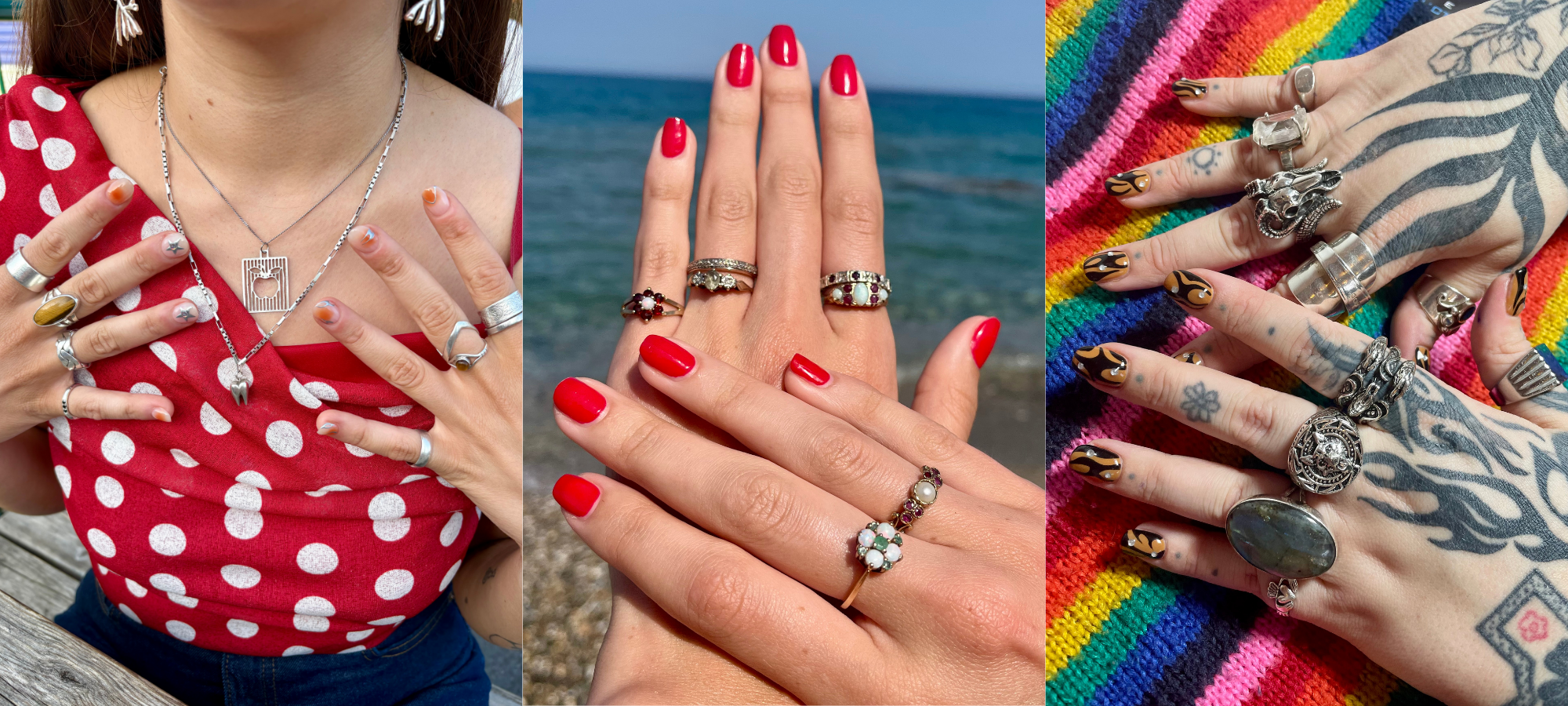
Examples of styling vintage jewellery across different aesthetics, from subtle everyday wear to more expressive stacking
Why this shift makes sense
I think this shift also reflects a wider change in how people want to shop and wear things. There’s more awareness around buying less, choosing better, and finding pieces that actually mean something rather than just following trends.
Jewellery naturally fits into that, because it’s something people keep for a long time. It holds memories, whether that’s where you bought it, who gave it to you, or what it represents.
That’s probably why the “trinket” style jewellery has become such a thing. Smaller, slightly random pieces that feel personal rather than polished. It’s less about having a perfect set, and more about building something that feels like yours.
And with vintage, that’s built in. Every piece is already one of one, so there’s no chance of it feeling generic.
How I think about jewellery
That’s always been how I’ve approached Sorrell Jewels.
I’ve never really been interested in matching sets or perfectly curated combinations. I’m much more drawn to individual pieces that can work together in different ways, depending on how you wear them.
When I’m sourcing, I’m not thinking about how everything will match. I’m thinking about whether each piece feels special on its own, and whether it has something about it that someone will connect with.
My intention is in helping you build your own collection over time, adding pieces that mean something to you, rather than trying to create a finished look all at once.